Dear Melissa,
I’m really late wishing you a happy birthday this year! Sorry for that. I hope you had a good one.
Love from, Uncle Craig
The Website of a Guy Named Craig

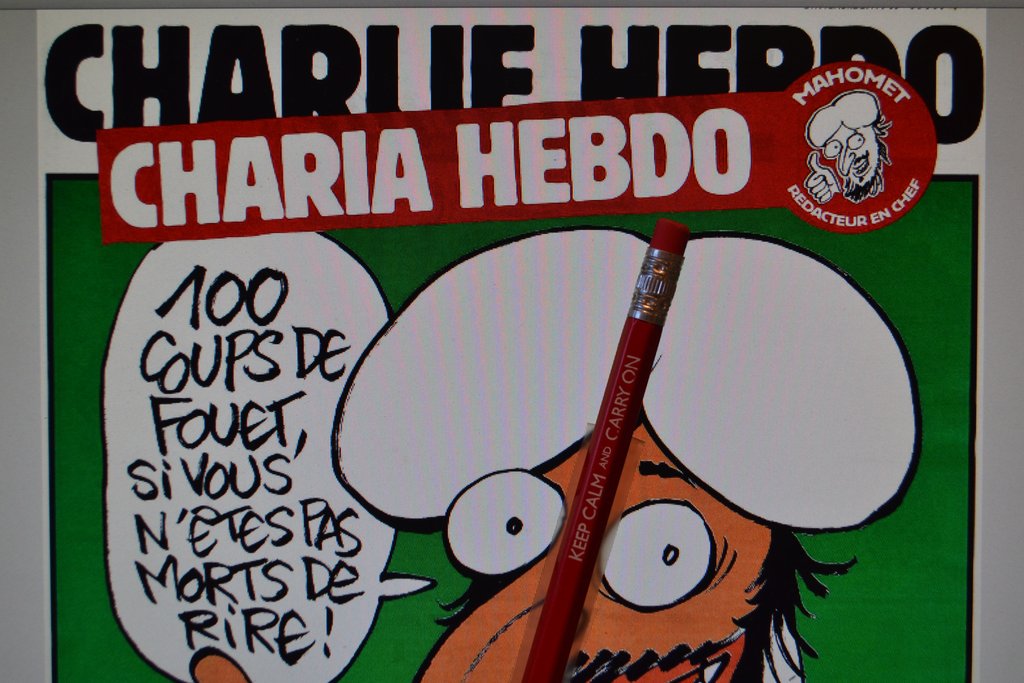
Charia Hebdo: Keep Calm and Carry On
It’s one year on (from 7 January 2015), and I’m remembering the attack on the offices of, and the cold-blooded murder of members of the staff at, Charlie Hebdo in Paris. Also of note is the concurrent murder of the protection officers that were detailed to protect certain Charlie Hebdo staff members after a previous terror attack in 2011 and two bystanders, as well as others who were murdered — another police officer and shoppers at a grocery store in Porte de Vincennes (a suburb of Paris) — in associated attacks in the days following.
I read somewhere recently that Charlie Hebdo was on the verge of closing down when the attacks happened, and that they have experienced a renaissance since. Perhaps that is the point behind their rather graphic tank cartoon, of which I heartily approve. If you believe in a higher power — Allah, God, whatever — I would call the recovery divine intervention. Take note: Your god does not approve of you killing people, certainly not in his name, and he’s not so fucking vain and insecure as to have issues with being drawn.
Vive la presse libre!

Sandra.
16 November 2015 17:09 PST
Dear Sandra,
You would have been 57 today. Happy birthday!
Love, Craig
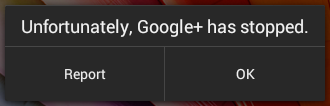
Google+ has crashed, burned and died, which is terribly unfortunate
As I’ve alluded to before, my disappointment with the Android operating system created by Google is mighty. However, it reached a new low last week.
Suddenly I kept being presented with “Unfortunately, Google+ has stopped” errors that prevented me from doing anything until I tapped either “Report” or “OK”. I tapped “OK” the first few times, but then I thought, “Well, maybe I should be a good user and report this problem.” At first my reports were polite, but after being presented with this error every few seconds, sometimes one on top of the other while I was still trying to report the previous instance, I started to use four-letter words, usually two per report. Then I just gave up, and hit a few random letters before sending my report. I figured that after a few dozen reports something might be done. I am so naive!
Anyway, after a day or two of not being able to do anything on my tablet without constant interruption by the Google Plus app apparently crashing, I decided to take matters into my own hands. First of all, I don’t use Google Plus in any shape or form, but (of course) it’s a “system app” that you are forced to keep, so I rolled back the updates and disabled it. Then I went and disabled every single Google app I could identify except the six that I’m actually using:
I have no doubt that there are more Google services on my tablet “phoning home” at every opportunity, but I probably can’t do much about those. As for the six that are left, short of “rooting” my device I probably can’t operate without the two “Play” apps, Gmail is on my list of things that I won’t need in the near future (and will disable) as I work diligently to stop using all Google services (I’ll be writing about that when I have some time), Chrome I’m keeping for now as I think it’s a good idea to have a second web browser on any machine (even if one of them is Google crap), Google Maps I will replace if or when I find something as good (in the meantime I’m fine using it with location services turned off), and Youtube … well, since it’s the world’s video sharing service, I won’t be disabling that any time soon, I suppose.
Speaking of rooting, I’m now way more inclined to do that than I was a couple of years ago when I bought this tablet. The only issue is that I don’t have the time to spend managing all of my computing resources. Technology was supposed to save us time, allowing us to frolic in fields of green with our friends and families while the computers did all the work. Instead we’re chained to them like slaves. How bloody ironic! Anyway, my tablet doesn’t seem to be on a list of supported devices for which there are instructions and software for rooting. Further digging reveals that I could probably work on it but … here we are back at the time excuse in this circular argument.
But here’s some further irony in this story: Once I had disabled all of the Google apps I could get my hands on, suddenly I could multitask again! Well, as well as you can on a tablet, I suppose. Where once I couldn’t switch to another app without it completely reloading from scratch, now I can get back to where I was mid-session with some of them. Firefox is the exception, which annoyingly reloads tabs from scratch every single time they’re re-selected.
Update, 29 November 2015: Having got on a roll and removed or (if it’s a “system app”) disabled any app that I’m not using, I was left with Samsung WatchON, which (after rolling back all of the updates) I can neither disable nor remove nor even stop. And yet, according to its Wikipedia article (as much research as I am willing to waste my time with), “App is discontinued on December 31, 2014 worldwide except US and Korea, and June 15, 2015 in those remaining two countries.” (The wording of that is not the only problem with the Wikipedia article.) When I try to run the app I’m told that it won’t run because the time on my device is wrong. Well, actually Samsung, it’s not. And so, having rolled back all of the updates so that I could disable this “system (cr)app”, I’m now running an out-of-date and possibly vulnerable app that I can neither stop, disable nor remove, and I keep being prompted to update it. Well, I guess I’d better update it then to stop the annoyance! Now when I try to run it I get an error message about not being able “to retrieve data from the server.” It helpfully suggest that I “Try again later. (1) [sic]”
Thanks, Samsung, you useless bastards.
I realised recently that this blog has been running for almost five years, and has accumulated over sixty posts. That’s not many posts by most standards (about one a month — pathetic, really, and not evenly), but actually a hell of a lot more than I expected to post. I was surprised by this realisation.
Therefore I figure it’s time to make this site live. Yes, although this blog has existed for a few months short of half a decade, it has not actually been available on the Web until now. Rather than making a decision about a hypothetical blog, I decided to set this up and treat it as if it was live, and after a while I’d see how it actually worked for me in practice. What I have learnt is that my standard for accuracy won’t allow me to post as often as I’d like. (Perhaps one day I’ll set up a Twitter account for those brief flashes of off-the-cuff genius and annoyance.) However, whether I post once a day or once a month, the fact is that the mere existence of this blog gives me an outlet. Sometimes it’s just to vent, and sometimes it’s so that I can add to the body of knowledge (that I often consult) available on the Web on a subject about which I know a little bit.
So, this post is the first one to be public from the get-go. While I have long considered running a blog and it appeals to the exhibitionist and editorialist in me, I have been very ambivalent about actually doing so. Like most things, there are pros and cons … and there are definitely some very good arguments against doing this. However, at the end of the day, I have decided that the pros (and some specific goals) outweigh the cons, and here we are. I’m not doing this for fame or fortune, that’s for sure, but hey … everyone needs a hobby, and the ones I’d like to engage in (or do more of) are more expensive than cocaine (whatever that costs).
One of the reasons it has taken me five years to get to this point is my penchant for perfectionism alluded to above … something that will greatly limit my posting as much stuff as I would like. While I realise that there are many blogs out there where all you know about the owner is that his name is Bob, I actually do want to provide enough information about myself and my biases that people might take what I say reasonably seriously, without wanting to knock on my door and donate a knuckle sandwich (or worse). A blog’s “about” page is usually my first stop after reading whatever post led me there, and it is my intention to make mine useful. However, if I wait for the day I finally craft an “about” page that meets my standards (or do the many other projects on my to-do list for this blog), this will never go live. (My notes for it already amount to two thousand words.) For now, if you visit my “about” page, you’ll see the same thing I’ve had on my static site for years, but eventually I’ll have something more comprehensive there.
Anyway, that is all. Let’s see where this leads.
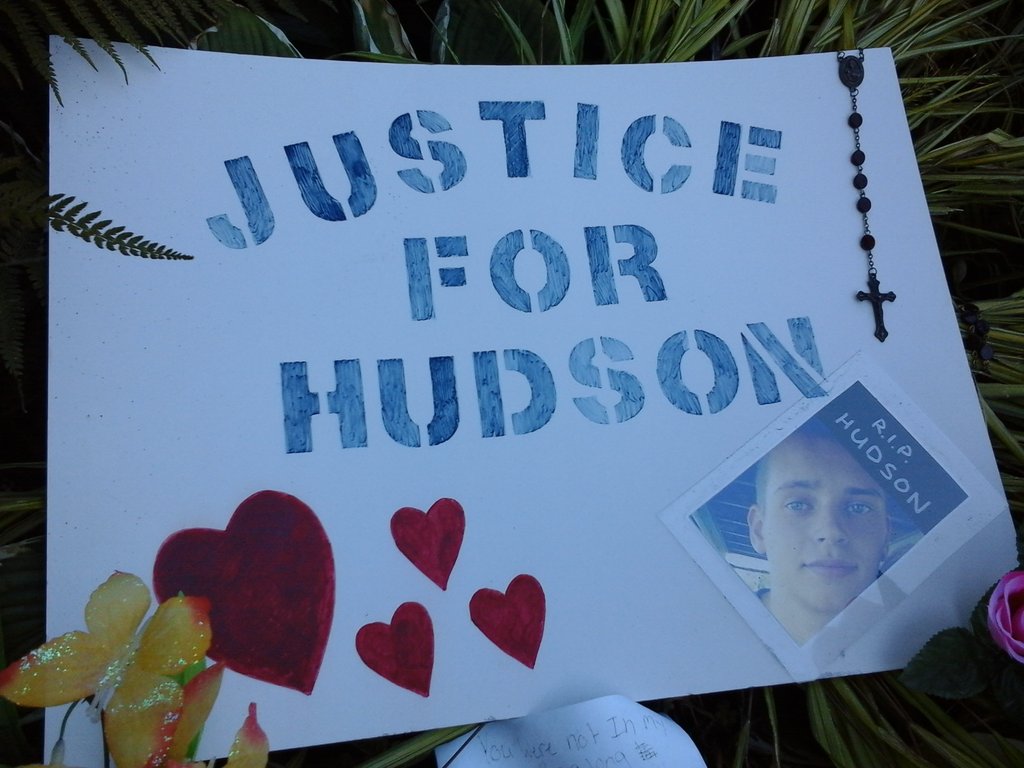
Hudson Brooks memorial, Surrey, BC, 7 August 2015
As I write this — 01:30 on Friday 24 July — a Surrey RCMP vehicle is sitting outside my house with its red-and-blue lights flashing. The street is quiet now, but earlier it looked like they were having someone’s vehicle taken away on a flat-bed tow truck, “they” being the occupants of at least three police cars.
Fresh in my mind is the shooting and killing of Hudson Daryl Willis Brooks — virtually a neighbour to me, I would assume, the same age as (and a student of the same university attended by) a friend of mine — on 18 July 2015, only six days ago and only six blocks from my home, right outside the RCMP office there. The media is, strangely, quite quiet on this story. I don’t know why this is.
I wasn’t there the night (about this time of the day) Hudson was shot and killed by members of the Surrey RCMP. But as someone who watches this play out in the news far too often and who sees the police on the streets of my community, I come to my own conclusions.
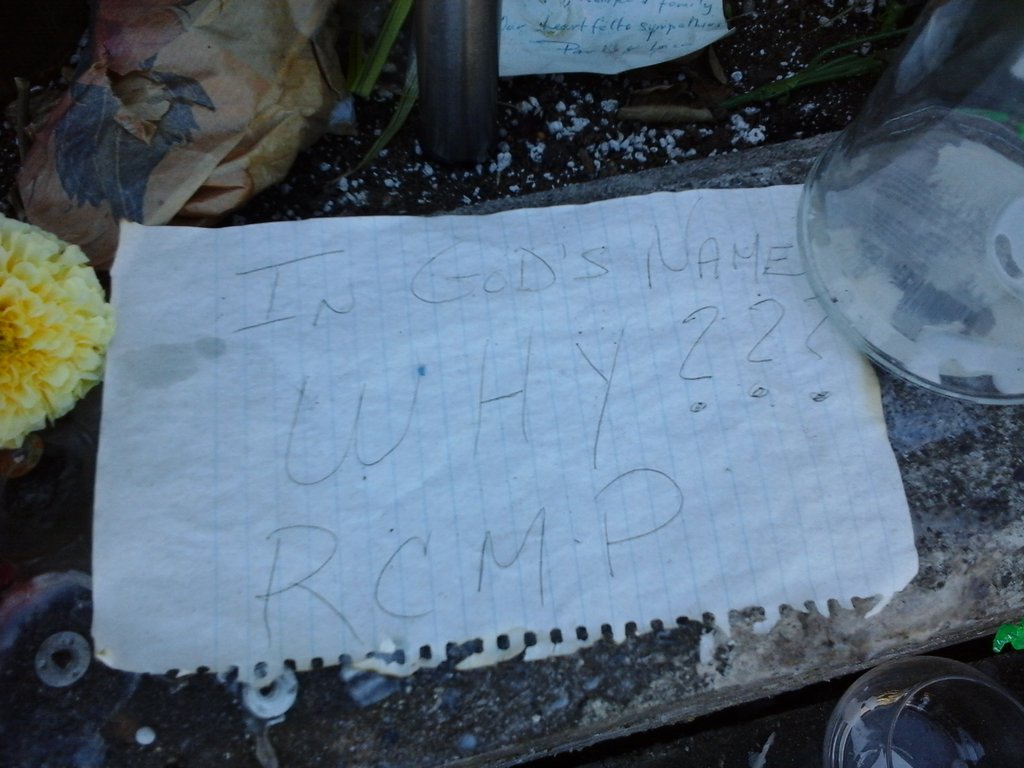
Hudson Brooks memorial, Surrey, BC, 7 August 2015: “In God’s Name WHY??? RCMP.”
We’re all familiar with the “cop type”, be they male or female: the puffed out chest, accentuated by the bullet-proof vests they feel the need to wear to protect themselves from people who don’t like cops … hard to imagine why. Whether they’re swaggering into a doughnut shop or into the middle of a “situation”, their swagger is accentuated by their utility belt bristling and jingling with equipment, and the speed with which they implement their unofficial “comply or die” policy. (Said equipment includes not just their side arm, taser, handcuffs, etc., but also all of the other stuff that gets marketed to cops by various businesses that thrive off of their desire to be kitted out with all the latest cool shit: two-way radios, flashlights that double as a weapon to beat someone down, and the ever-present cool sunglasses that mean they don’t have to make eye contact with whomever they’re beating or shooting or intimidating.) And let’s not ignore the trend in recent years to adopt American-style black-based colour schemes in uniforms and car paint jobs (with the notable exception of the RCMP, I should note); clearly nobody cared to conduct anything like a poll or a focus group among ordinary citizens, who find the adoption of such a colour to be vaguely intimidating. But, of course, the cops know this, and anything that makes them more intimidating is perfectly fine with them.
Now, I’m not suggesting the cops don’t need equipment at hand or that they shouldn’t wear bullet-proof vests, but the biggest thing that comes strutting down the street, generally speaking, is not the cop, his or her utility belt or vest, or the black race cars they think they’re driving, but their inflated fucking egos! This is what is demonstrated just about every single time you see a video of a cop behaving badly these days, whether beating an individual or trying to intimidate the crowd that gathers that, one of these days, is going to lynch a cop. This is what was on display the night that Robert Dziekanski was killed by the police at Vancouver International Airport, when “comply or die” was implemented within — what? — about 26 seconds of arrival by the four massive, 747 Jumbo-sized egos that swaggered into the airport terminal and unnecessarily vaulted over barriers they could have walked around. This was what was on display by the Vancouver Police Department when they shot and killed a mentally-challenged guy swinging what some witnesses described as a “stick”. And although it seems that there were no independent witnesses to the lonely death of Hudson Brooks that night, I have absolutely no doubt in my mind that he died within seconds of the cops swaggering onto the scene with their “comply or die” attitude.
No fucking doubt in my mind.

Hudson Brooks memorial, Surrey, BC, 7 August 2015
And just like the character assassination the RCMP implemented in the media against Robert Dziekanski in 2007, it was quickly revealed that one of the cops was shot. Days later it was revealed that no weapons other than cop weapons were found at the scene, so Hudson wasn’t armed, it would seem. Hmm, another unarmed and probably innocent citizen — apparently calling out for help, just like Dziekanski was — gunned down by police, this time in the dead of the night (pun not intended) with nobody around to see. What lies will the cops tell about that night? No doubt they’ll say that Hudson went for a gun, or that he was resisting arrest and so had to suffer the consequences of the overarching “comply or die” directive. What kind of testosterone-laden morons (and I use that term to apply equally to all genders of the RCMP and other police forces) are we hiring these days?
Speaking of which, some of the employers of these cops — that would be the tax-paying public — expressed their disgust at their employees by spray-painting graffiti on and around the police station a couple of days later. Of course, the police are actively investigating that heinous crime, something far more serious than the killing of citizens who are more likely in need of help than a bullet.
Anyway, back to the cop who was parked in the road outside my house for anywhere between thirty and sixty minutes in a no-stopping zone this morning. Sure, it’s the middle of the night, there is another lane for traffic to go around, and traffic wasn’t exactly backing up behind him (or her). With the other cops having left the scene it looked to me like this cop was doing paperwork in his car, his bright lights flashing into the windows of all of the surrounding houses where people are trying to sleep. He certainly didn’t seem to be doing any sort of investigative work on the road itself — there was no accident — and he could easily have pulled into the side street (the corner of which he was also dangerously partially blocking) or the shopping centre across the street and turned off his flashing lights. But he didn’t.
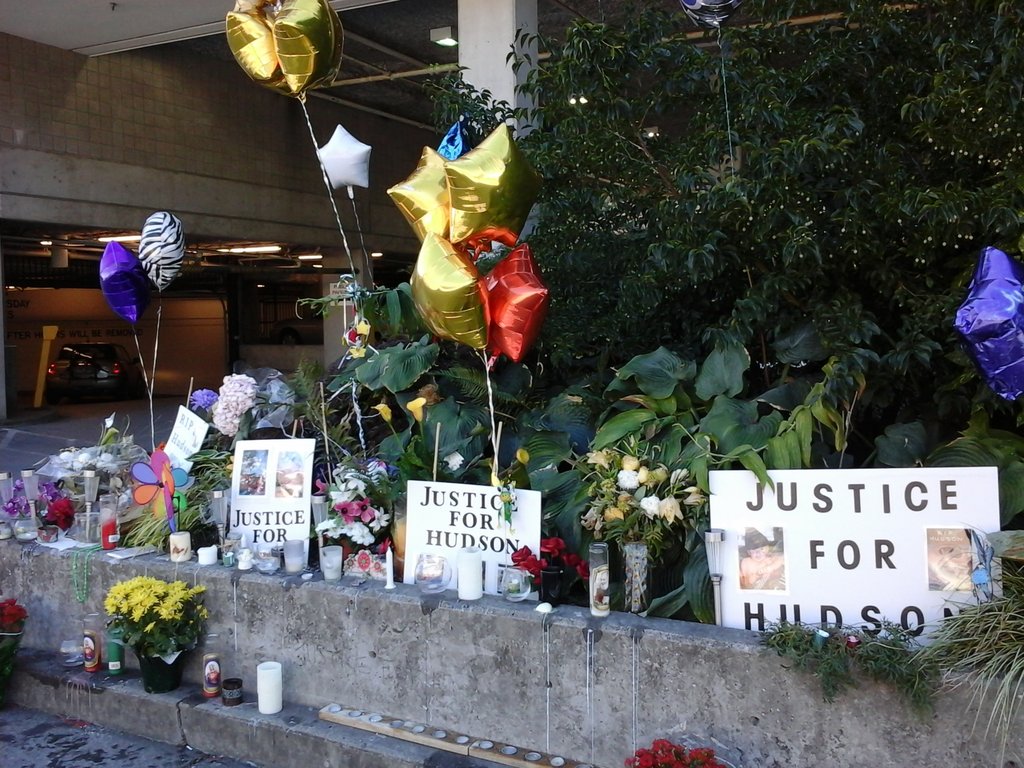
Hudson Brooks memorial, Surrey, BC, 7 August 2015
There wasn’t any actual swaggering going on, but quite clearly this cop thinks he is more goddamned important than anyone else, and it doesn’t matter to him that he is projecting his massive ego into the houses around him and blocking half the street with it. It’s this kind of attitude that he (or she) and his ilk drag into any interaction with the general public, and which results in tasers or guns being quickly drawn and used. If that was me sitting in my car blocking half the street, perhaps I’d have been on the wrong end of a Surrey RCMP member’s loaded gun tonight.
Life is about struggle. Whether you’re an amoeba or a human, life is a struggle. For some organisms, it’s simply a struggle to stay alive for another second. Just this morning I’m watching two doves outside my office struggle with a crow over territory, and as I write this reinforcements from the crow side have showed up to gang up on the doves. (Perhaps this murder of crows have murder on their minds.) The highlight of an African safari, for many, is witnessing the struggle of predator and prey — the predator struggling to get another meal, the prey struggling not to become that meal … to stay alive.
Human history is all about struggle. Much of that struggle is unjust in many ways — the struggle between a weaker, unprepared victim and a stronger attacker that has prepared for the struggle. In a civilised society we are, as a collective, supposed to protect the weak and discourage the strong from taking advantage of them.
But despite this, humanity is not likely — ever — to become one homogenous mass of people all thinking the same way, reacting the same way, believing the same things, shunning the same negatives and embracing the same positives. And most people, including me, would argue that this is a good thing.
So I get that people rail against other people. It’s part of the struggle. Only today — in 2015 — most of us tend to do so with our pens … or keyboards. Relatively few of us take up arms, either as individuals or groups, or against individuals or groups.
But some do. And we rightly rail against them using our keyboards, and we use the tools of our civilisation to deal with them in one way or another.
However, some people then go past indicting the specific perpetrator of the specific injustice and commit further injustices against people who had nothing to do with the crime. If the criminal was black, they blame all black people. If the criminal was Muslim, they blame all Muslims. If the criminal was white, however, they blame the entire white race, from whoever the very first white person was down to the newest white person born within the last few seconds. Even that seconds-old white baby is tainted by the white man’s Original Sin, and blessed (or scourged) by the “privilege” of his or her white skin, with no hope of ever redeeming him- or herself in the eyes of the people who attack the white race for the sins of their forefathers.
I understand their anger. So much of the aforementioned human history has been a struggle between whites and non-whites. (Of course, there has been struggle between people of all races and within races, but many people tend to focus on that between whites and people of colour.) But if all you’re going to do in your ranting is paint all whites (or any group) with the same brush, you’re no better a bigot than the Dylann Roofs of this world — you’re just a different bigot, perhaps with a different colour skin than Roof’s — and your collective punishment is certainly not contributing to a solution to any problem.
So rail all you want against whites and “white privilege”; you’re part of the daily struggle of life. Just don’t pretend that you’re above it, and better than the rest of us struggling in this cesspool of multi-hued humanity.
Written (despite the date of publication) in late June 2015 after reading Dylann Roof is not an extremist, but really, the thought has been formulating in my mind for the last ten days since Roof’s (alleged) shooting and the reactions to it, especially those that reference Rhodesia.
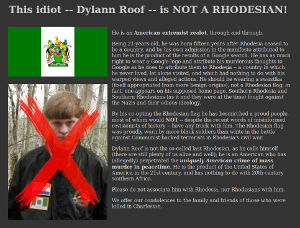
Screenshot of RhoMail.com from 22 June 2015
This is a re-post of a statement I published on the RhoMail.com website on 22 June 2015.
He is an American extremist zealot, through and through.
Being 21-years-old, he was born fifteen years after Rhodesia ceased to be a country, and by his own admission in the manifesto attributed to him he is the product of the results of a Google search. He has as much right to wear a Google logo and attribute his murderous thoughts to Google as he does to attribute them to Rhodesia — a country in which he never lived, let alone visited, and which had nothing to do with his warped views and alleged actions. He should be wearing a swastika (itself appropriated from more benign origins), not a Rhodesian flag; in fact, one appears on his supposed home page. Southern Rhodesia and Southern Rhodesians (as it and they were at the time) fought against the Nazis and their odious ideology.
By his co-opting the Rhodesian flag he has besmirched a proud people, most of whom would NOT — despite the recent words of misinformed revisionists of history — have any truck with him. The Rhodesian flag was proudly worn by more black soldiers than white in the battle against Communist-backed terrorists in Rhodesia’s civil war.
Dylann Roof is not the so-called last Rhodesian, as he calls himself (there are still plenty of authentic Rhodesians alive and well); he is an American who has (allegedly) perpetrated the uniquely American crime of mass murder in peacetime. He is the product of the United States of America in the 21st century, and has nothing to do with 20th century southern Africa.
Please do not associate him with Rhodesia, nor Rhodesians with him.
We offer our condolences to the family and friends of those who were killed in Charleston, and wish those injured a speedy and full recovery.
My submission today to the ICANN forum addressing the GNSO Privacy & Proxy Services Accreditation Issues Working Group Initial Report:
While I can’t understand why some businesses hide their contact information — it seems counter-intuitive — I emphatically support the legitimate use of WHOIS privacy and proxy services.
To state my bias up front, I am the registrant of 120 domains for business and personal use. None of my 44 business domains are protected by a privacy or proxy service. Of the remaining 76 domains, 8 (11%) use a privacy or proxy service. I’m not doing anything illegal with those 8 domains (you’ll have to trust me on that), but it’s controversial enough with some people that I wish to make it that much more difficult for those people to identify and/or find me. If the cops need to find me for any reason — which they don’t — including related to my domain registrations, it would take them all of five minutes with their legal powers (and, ironically, finding me probably wouldn’t even involve using WHOIS!), and that is sufficient for the greater good of society.
In my mind “legitimate use” of WHOIS privacy and proxy services includes hiding from people who would like to make it easier to track down people they disagree with (including using some legal pretext to do so), which includes even people with a legitimate reason to want that information. If someone with a legitimate intellectual property interest in the content of a particular website is motivated enough to contact the owner of that website, then they should be prepared to do some work to do so.
It should not be any easier to track down the owner of a domain than it is to track down the owner of a phone number or vehicle licence plate — which is not easy in my part of the world — if the domain owner does not want to be found by casual curiosity, even the professional curiosity of lawyers.
While I give ICANN lukewarm support for verifying WHOIS information provided by domain registrants (it might as well be accurate), the fact is that the WHOIS database is more useful for spammers than it is for any legitimate use. For that reason it is a far more negative effort than it is positive, and any effort to restrict the use of privacy and proxy services only makes the public perception of the WHOIS even more negative.
Archived on ICANN website.
Update, 13 August 2015: Removed the link to my submission on the ICANN website, as the URL keeps changing.